
Tile guide
How many tiles do I need?
To work out how many tiles you need, measure the area in square metres, add an allowance for cuts, and round up to whole boxes. This guide walks through each step with a worked example.
The method
How to work out how many tiles you need
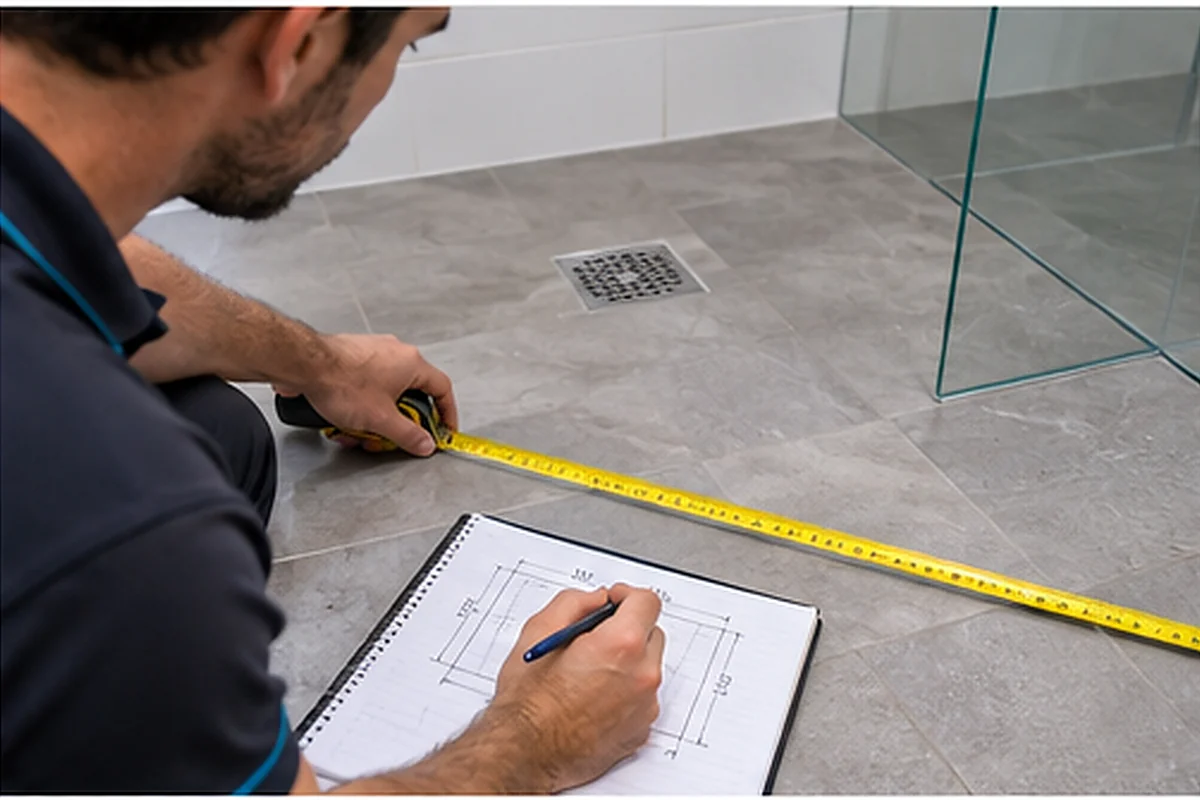
Tiles are sold by the square metre and packed in boxes, so the sum has three steps.
- Measure each area and work out its size in square metres.
- Add an allowance for cuts and breakage, usually 10 to 15 percent.
- Divide by the square metres in one box and round up to a whole box.
This page works as a simple tile calculator: follow the steps with your own measurements and you have the number of boxes to enquire about.
Floors
Measuring a floor in square metres
Measure the length and the width of the room in metres and multiply them. A bathroom 3.2 m long and 2.4 m wide is 3.2 x 2.4 = 7.68 square metres.
For an L shaped room, split the floor into two rectangles, work out each one and add them together. Do not subtract the space under a vanity or bath unless you are certain it will never be tiled. Choose your tile from the floor range before you finalise the figure, as the layout affects the allowance.
Walls
Measuring walls, niches and splashbacks
For each wall, multiply the width by the height you are tiling to. Add the walls together, then subtract large openings such as doors and windows. Add the sides and back of any shower niche, and the reveals around a window if they are being tiled.
A kitchen splashback is the length of the bench run multiplied by the height from the bench to the cupboards. See bathroom and kitchen wall tiles for sizes that suit walls.
Allowance
Why you add 10 to 15 percent
Every room needs cut tiles at the edges, and the offcut is often too small to use anywhere else. Tiles also break in transit and during cutting. The allowance covers both.
For the 7.68 square metre bathroom floor, adding 10 percent gives 8.45 square metres to order.
Boxes
Boxes, pieces and square metres
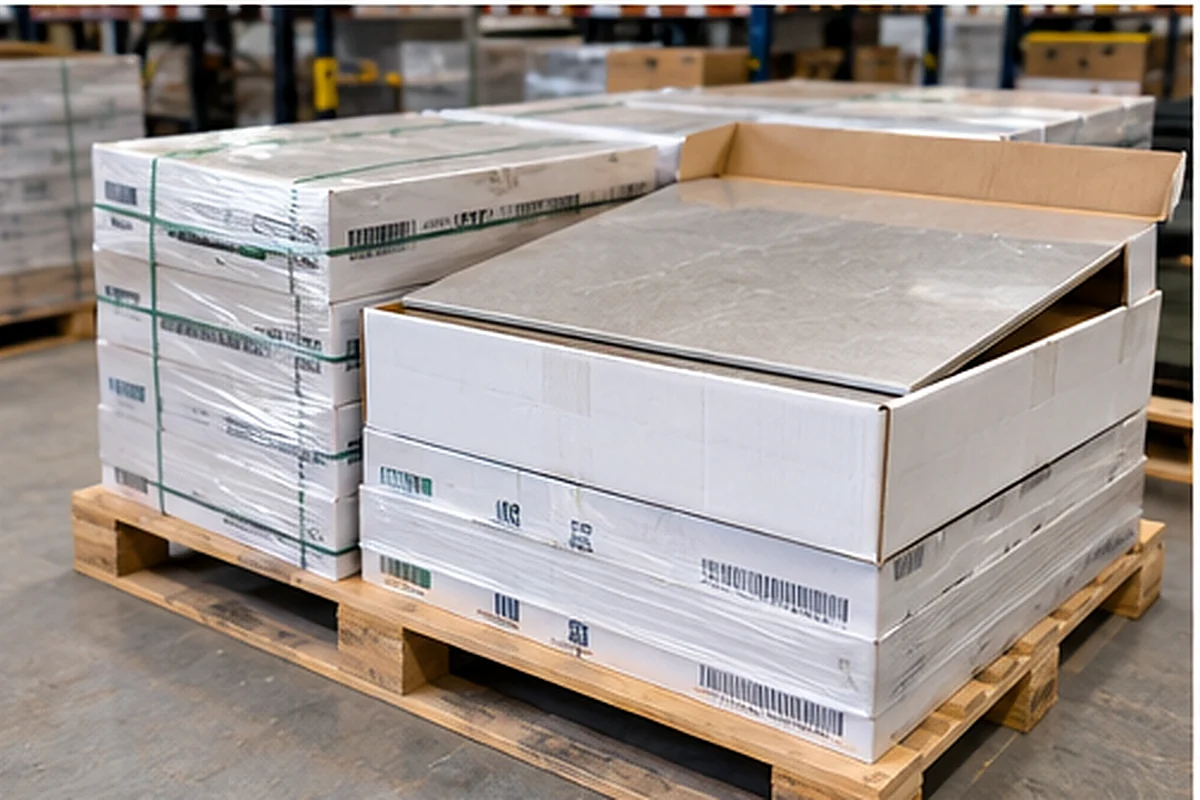
Tiles are supplied in full boxes. Many ranges on our site list their packaging: a 300 x 600 tile comes 8 to a box, a 600 x 600 tile 4 to a box and a 600 x 1200 tile 2 to a box, and each of those boxes covers 1.44 square metres.
To finish the example, divide 8.45 by 1.44. The answer is 5.87, so you would order 6 boxes, which is 8.64 square metres. Check the packaging line on the product page for your tile, as not every range is packed the same way.
How much tile adhesive do I need?
Adhesive is worked out from the same floor area. Coverage depends on the tile size and the trowel notch, and it is printed on every bag, so take your square metres to the adhesive page or ask the team.
Layouts
Layout patterns that need more tiles
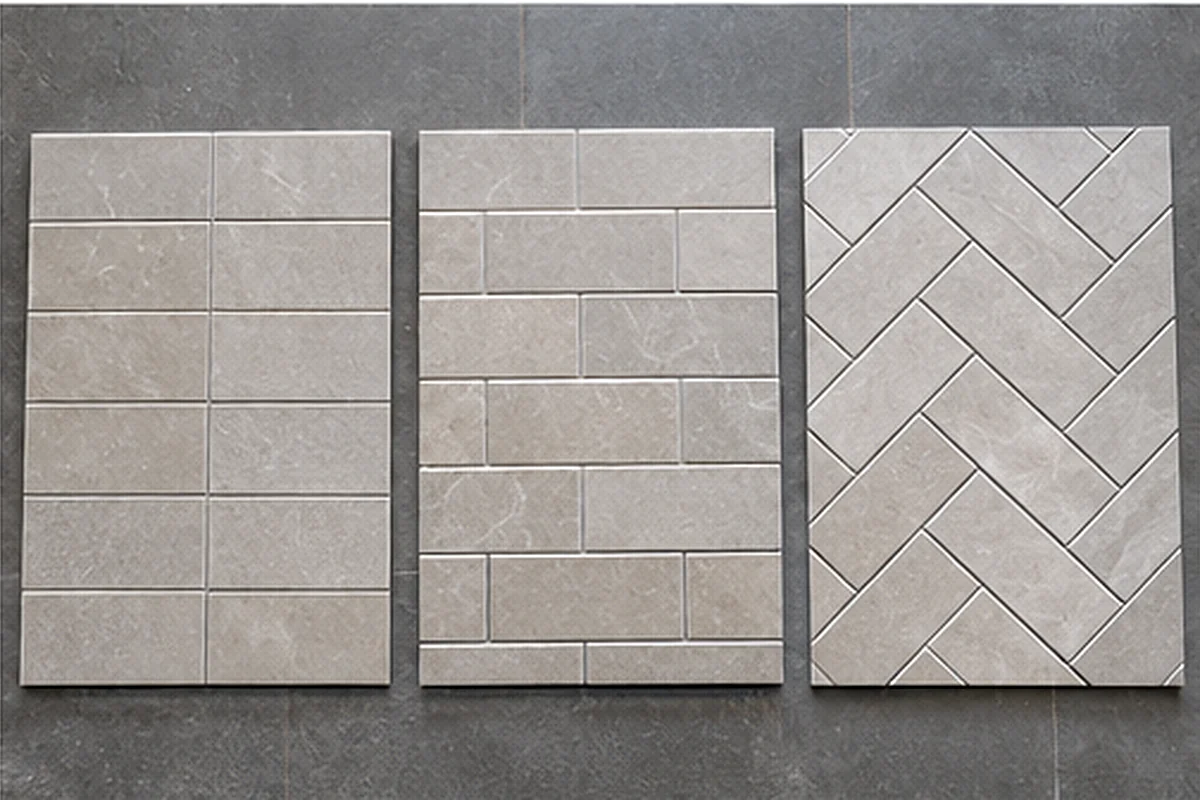
The pattern changes how many tiles are cut, and so how many are wasted.
How much extra should you allow for each layout?
| Layout | Allowance to add | Why |
|---|---|---|
| Straight or stacked | About 10% | Cuts only at the edges of the room |
| Brick bond, half or one third offset | About 10% | A few more cuts at the ends of each row |
| Diagonal | About 15% | Every tile at the edge is cut on an angle |
| Herringbone | 15% or more | Angled cuts on all four sides, and offcuts are hard to reuse |
| Rooms with many corners, niches or windows | Add a little more | More cuts and more breakage |
General trade guidance. Your tiler confirms the allowance for your room and tile.
Who measures
When to get your tiler to measure
Ask your tiler to measure if the room is not square, the walls have steps or bulkheads, the floor needs falls to a waste, or you want a pattern such as herringbone. A tiler also knows where the cuts will land and can tell you if one more box will save a row of slivers.
Bring the measurements with you, or add each area to your enquiry cart and note the room it is for.
Running short
What ordering short can cost
Tiles are made in batches, and the shade can differ slightly from one batch to the next. If you run short, the extra box may not match the tiles already on the floor. The job also stops while you wait.
Under our sales terms it is your responsibility to check the colour and the batch or shade of all goods before they are installed. Checking the boxes when you collect them takes a few minutes and avoids the problem.
Spares
Keeping spare tiles
Keep at least a few tiles from the same batch once the job is finished. A cracked tile can then be replaced years later with one that matches exactly.
Store spares flat, dry and labelled with the room they came from. When you are ready to choose, browse all tiles, and see more guides and how-tos for the next step.
Tile quantities
Tile quantity questions
How many tiles do I need?
Measure the area in square metres, add 10 to 15 percent for cuts and breakage, then divide by the square metres in one box and round up. A 7.68 square metre floor with 10 percent added needs 6 boxes of 1.44 square metres.
How do I calculate square metres for tiles?
Multiply the length by the width in metres. For walls, multiply the width by the height. Split awkward rooms into rectangles, work out each one and add them together.
How many extra tiles should I buy?
Allow about 10 percent for a straight or brick bond layout and about 15 percent for diagonal and herringbone layouts. Add a little more for a room with many corners or niches.
How many tiles are in a box?
It depends on the tile. On ranges that list their packaging on our site, a 300 x 600 tile is packed 8 to a box, a 600 x 600 tile 4 to a box and a 600 x 1200 tile 2 to a box, each covering 1.44 square metres.
Do I need more tiles for a herringbone pattern?
Yes. Herringbone has angled cuts on every side of the room and the offcuts are hard to reuse, so allow 15 percent or more instead of 10.
Can I buy more of the same tile later?
You may be able to buy the same range, but it can come from a different batch with a slightly different shade. Order enough at the start and keep a few spares from the same batch.