
Tile guide
What are rectified tiles?
Rectified tiles have edges that are ground square after firing, so every tile is the same size. This guide explains how they are made, why they allow narrower grout lines, and what that means for laying and cost.
The basics
What a rectified tile is
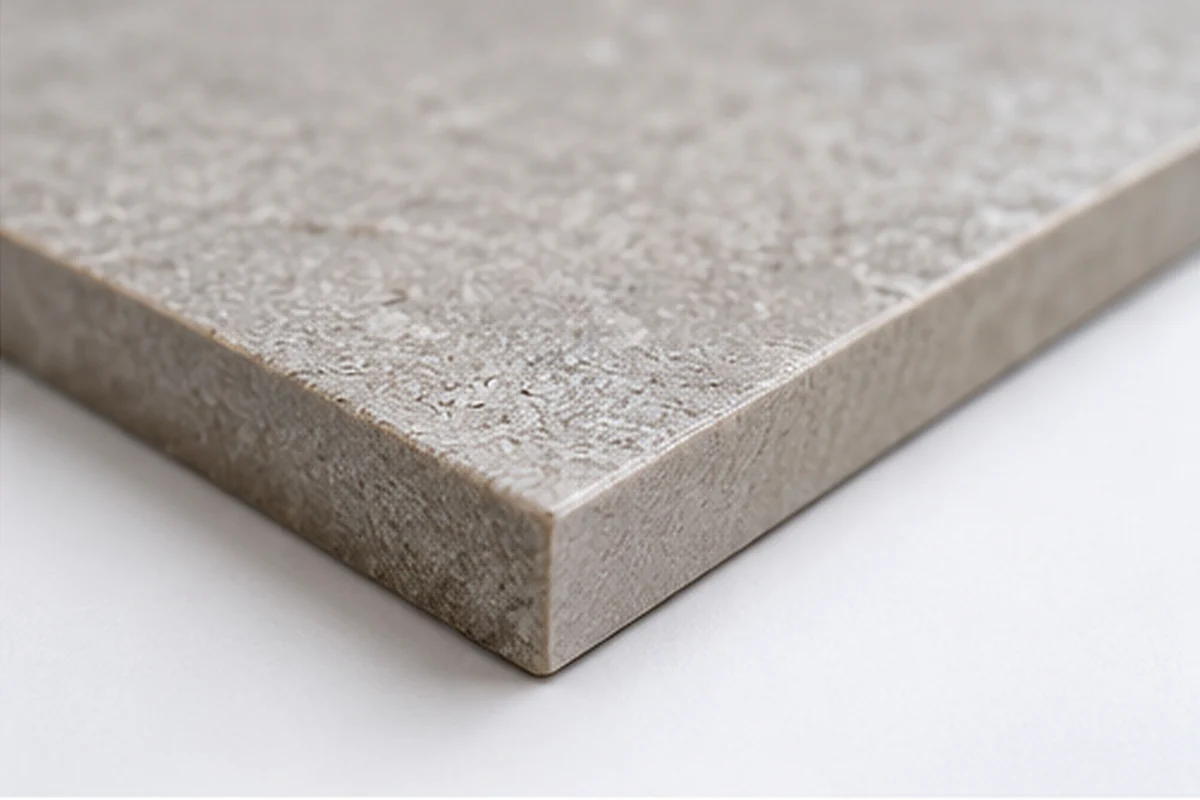
A rectified tile is a tile that has been cut or ground on all four sides after it comes out of the kiln. The edges are square and sharp, and each tile in the box is the same size to within a fraction of a millimetre.
People often ask what is a rectified tile because the word appears on the box and nowhere else. It describes the edge only. It says nothing about the colour, the finish or the strength of the tile.
Manufacture
How rectified edges are made
Tiles shrink in the kiln, and they do not all shrink by the same amount. A standard tile is sold at the size it comes out, sorted into size groups called calibres.
A rectified tile goes through one more step. Diamond wheels grind each edge to an exact dimension, which removes the size variation and leaves a clean, square edge. Many rectified tiles also have a very fine bevel to stop the edge chipping.
Compared
Rectified versus cushion edge
The alternative is a cushion edge, also called a pressed edge, where the tile keeps the slightly rounded edge it had when it was pressed.
Rectified or cushion edge: what is the difference?
| Rectified tile | Cushion edge tile | |
|---|---|---|
| Edge | Ground square and sharp after firing | Slightly rounded, as it left the press |
| Size | Every tile ground to the same size | Varies a little from tile to tile and batch to batch |
| Grout line | Narrow, commonly about 1.5 to 3 mm | Wider, commonly 3 mm or more |
| Look | Crisp, close to a continuous surface | Softer, with the grid of joints more visible |
| Laying | Needs a flat surface and careful levelling | More forgiving of small variations |
Joint widths are common trade practice. The tile maker and AS 3958, the tile installation standard, set what applies to a job.
Grout lines
Why rectified tiles allow thinner grout lines
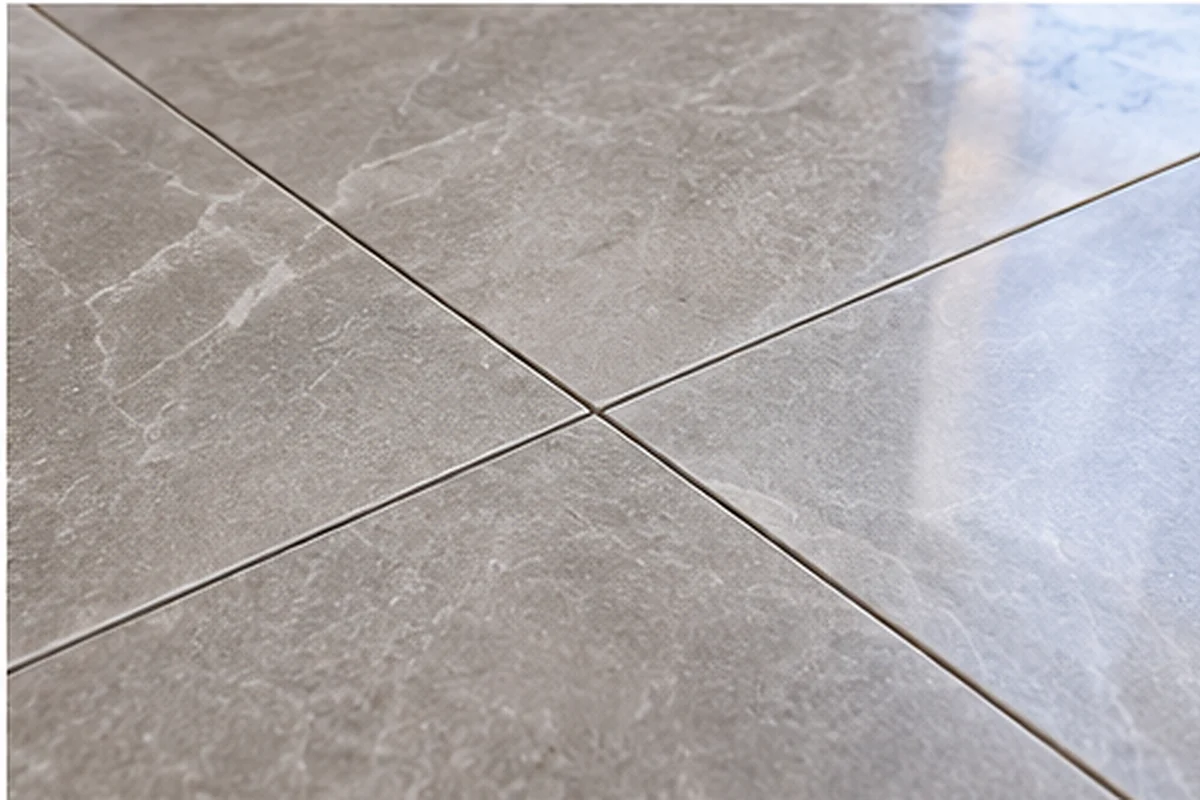
A grout line has two jobs: it takes up small differences in tile size, and it gives the floor room to move. With rectified tiles the first job nearly disappears, because the tiles are all the same size. That lets the joint be narrower.
A joint is still needed. Tiles laid hard against each other have nowhere to move and the edges can chip or lift. Choose a grout that suits a narrow joint from our grout colours and primers, in a colour close to the tile.
Best uses
Where rectified tiles work best
Rectified tiles suit large, open floors and walls where you want the surface to read as one plane: living areas, kitchens and bathroom walls. They also suit stone and marble looks, where a wide grout grid would break up the pattern.
Whether a range is rectified is not stated on our product pages, so ask the team about the range you like. Start with our floor and wall tiles, or go straight to tiles for your floor.
Lippage
Lippage and how tilers avoid it
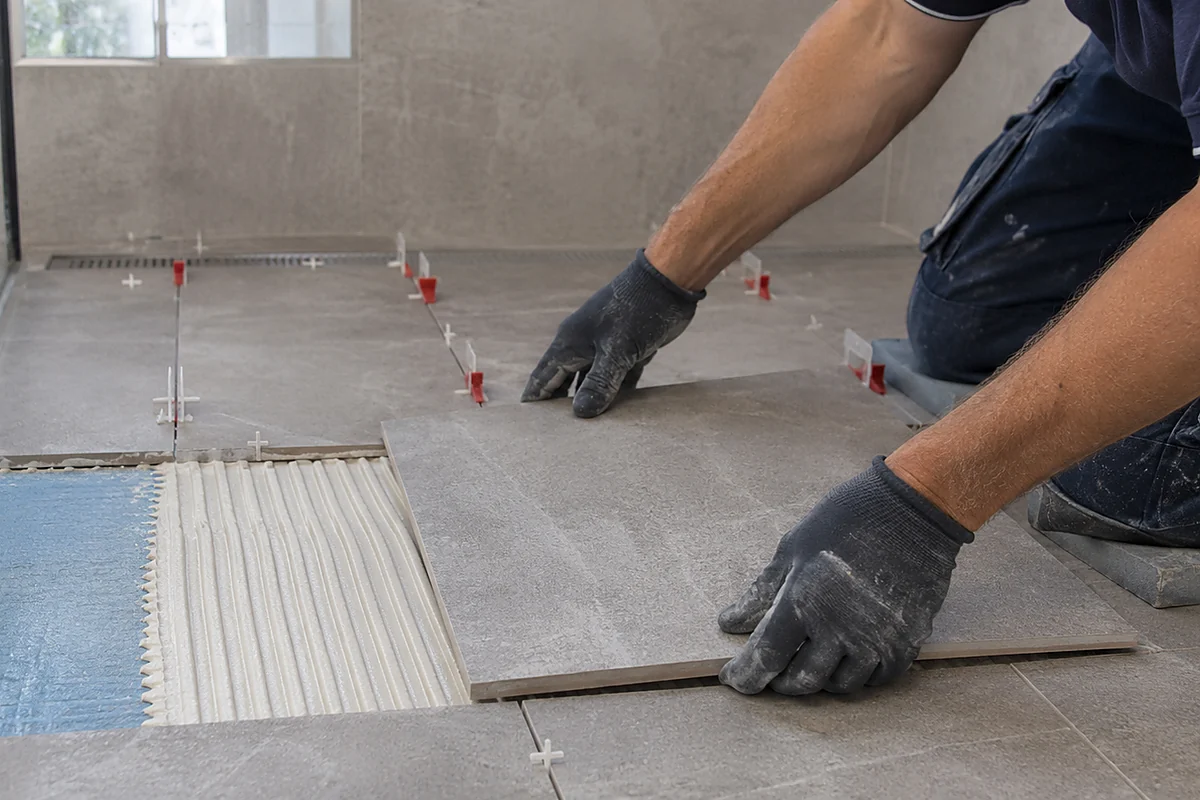
Lippage is the step you can feel where one tile edge sits higher than the next. Narrow joints and square edges make it easier to see, and light across a polished floor shows every step.
Tilers avoid it by flattening the surface first, using the right trowel and full adhesive coverage, and holding the tiles level with a clip and wedge system while the adhesive sets. Large rectangular tiles are usually laid with a one third overlap, not a half overlap, because long tiles can have a slight bow.
Who lays them
Laying rectified tiles: DIY or tiler
Small rectified wall tiles are within reach of a careful DIY tiler. Large rectified floor tiles are not a good first job. They are heavy, they need a very flat surface, and a mistake shows across the whole floor.
If you are paying for a premium tile, a tiler who lays large format tiles every week is worth the cost.
Cost
Do rectified tiles cost more
Usually a little, for two reasons. Grinding the edges is an extra step in the factory, and laying takes longer because the surface has to be flatter and the joints more exact.
Ask your tiler to price the laying for the tile you have chosen before you order. Other topics are covered in our buying guides.
Rectified tiles
Rectified tile questions
What is a rectified tile?
A rectified tile has been ground or cut on all four edges after firing, so every tile is the same size with square, sharp edges. It can be laid with narrower grout lines than a cushion edge tile.
What is the minimum grout gap for rectified tiles?
Rectified tiles are commonly laid with a joint of about 1.5 to 3 mm, narrower on walls than on floors. The tile maker and the installation standard, AS 3958, set what applies. Tiles should never be laid with no joint.
Are rectified tiles better?
They are better if you want narrow grout lines and a crisp, continuous look. They are not stronger or harder wearing than a cushion edge tile of the same quality, and they cost more to lay.
Are rectified tiles harder to lay?
Yes. Narrow joints leave no room to hide an uneven surface or a tile that sits high. The floor or wall has to be flatter and the tiler has to work more exactly.
Can you tell if a tile is rectified?
Look at the edge. A rectified tile has a sharp, square edge, sometimes with a tiny bevel. A cushion edge tile curves gently from the face to the side. The box or specification sheet also states it.
Are all porcelain tiles rectified?
No. Porcelain tiles are made with both rectified and cushion edges. Rectified edges are most common on larger sizes. Check the specification of the range, or ask us.