
Tile guide
How to choose tile adhesive and grout
Adhesive holds the tile to the surface and grout fills the joints between tiles. Choosing the right pair matters as much as choosing the tile. This guide explains the types, which suits which job and how to grout.
The basics
How tile adhesive and grout work together
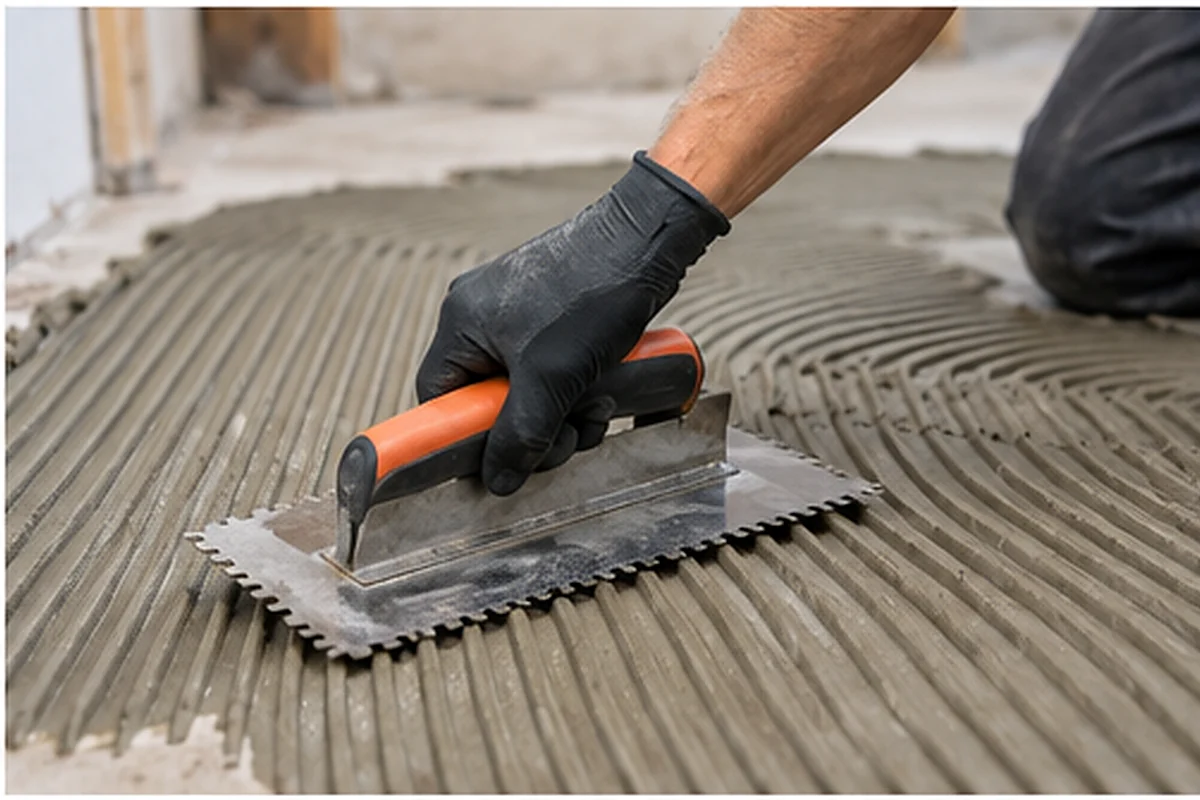
Adhesive is the bond. It is spread on the surface with a notched trowel, and the tile is bedded into it. Grout goes in afterwards, once the adhesive has set, and fills the gaps so that water and dirt cannot get under the tile edges.
The two are chosen together because they share the same conditions: the tile, the surface underneath, and how much water and movement the area will see.
Choosing
Choosing the best tile adhesive for your tile
There is no single best tile adhesive. The best one is the one its maker lists for your tile and your surface.
Which adhesive and grout suit which job?
| Job | Adhesive to look for | Grout to look for |
|---|---|---|
| Ceramic wall tiles, indoors | A premixed wall tile adhesive, or a standard cement based adhesive | Fine grout for narrow joints |
| Porcelain floor tiles | A flexible, polymer modified cement based adhesive | Sanded or flexible grout to suit the joint width |
| Wet areas such as showers | A cement based adhesive listed for wet areas, over a waterproof membrane | A flexible grout, with silicone in the corners |
| Large format and rectified tiles | A flexible adhesive with no vertical slump, applied to the floor and the back of the tile | A grout made for narrow joints |
| Natural stone and mosaics | A white or stone rated adhesive | A grout listed as suitable for stone |
General guidance. The data sheet of each product states the tiles and surfaces it suits.
On our range, the makers describe Ultraflex, SikaTile-366 Pro Flex and Laticrete 335 for porcelain, and Powder Mastic for large format and rectified edge tiles. See adhesive for porcelain and large format for the full list.
Types
Cement based, premixed and epoxy adhesive
Cement based adhesive is a powder mixed with water on site. It is the most widely used type, and it comes in grades: C1 is the normal grade and C2 the improved grade, with extra letters for properties such as fast setting and flexibility.
Premixed adhesive comes ready to use in a tub and is made for ceramic wall tiles indoors. Epoxy adhesive is a two part resin used where chemical resistance or a very strong bond is needed, mostly in commercial work.
Grout
What grout is and what it does
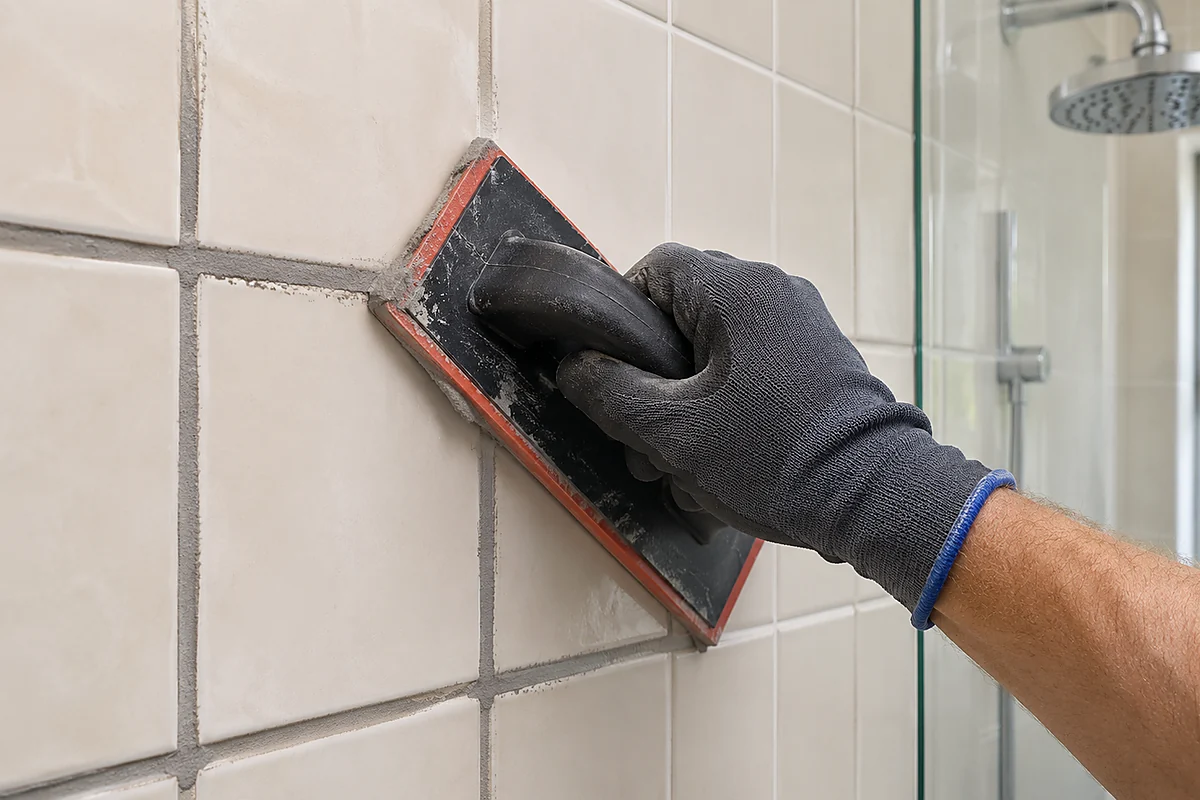
Grout is a fine cement or resin based filler for the joints between tiles. It keeps the edges supported, stops water and dirt getting into the joint and takes up small differences in tile size.
Cement grout is the standard choice and comes in a wide range of colours. Epoxy grout is resin based: it resists stains and chemicals better and is harder to apply. See coloured grout for the colours on our range.
How to
How to grout tiles, step by step
- Wait until the adhesive has set. The data sheet gives the time, commonly about a day for standard adhesives and less for rapid setting ones.
- Rake any adhesive out of the joints and wipe the tile faces clean.
- Mix the grout to the bag instructions. Too much water weakens it and changes the colour.
- Push the grout into the joints with a rubber float held at an angle, working across the joints.
- Scrape off the excess with the float, then wait for the grout to firm up.
- Wipe the tile faces with a damp sponge, rinsing it often, and shape the joints.
- Polish off the haze with a dry cloth once the surface has dried.
The float, sponges and spacers are listed with trowels, spacers and levelling systems.
Failures
Why adhesive and grout fail
Most failures come from a short list of causes: the wrong adhesive for the tile, a dusty or unprimed surface, too little adhesive under the tile, grout mixed too wet, and no movement joints.
A porcelain tile fixed with a basic wall adhesive can come loose, because porcelain absorbs almost no water and needs a modified adhesive. Hollow sounding tiles usually mean the adhesive did not cover the back of the tile.
Sealing
Sealing and maintaining grout
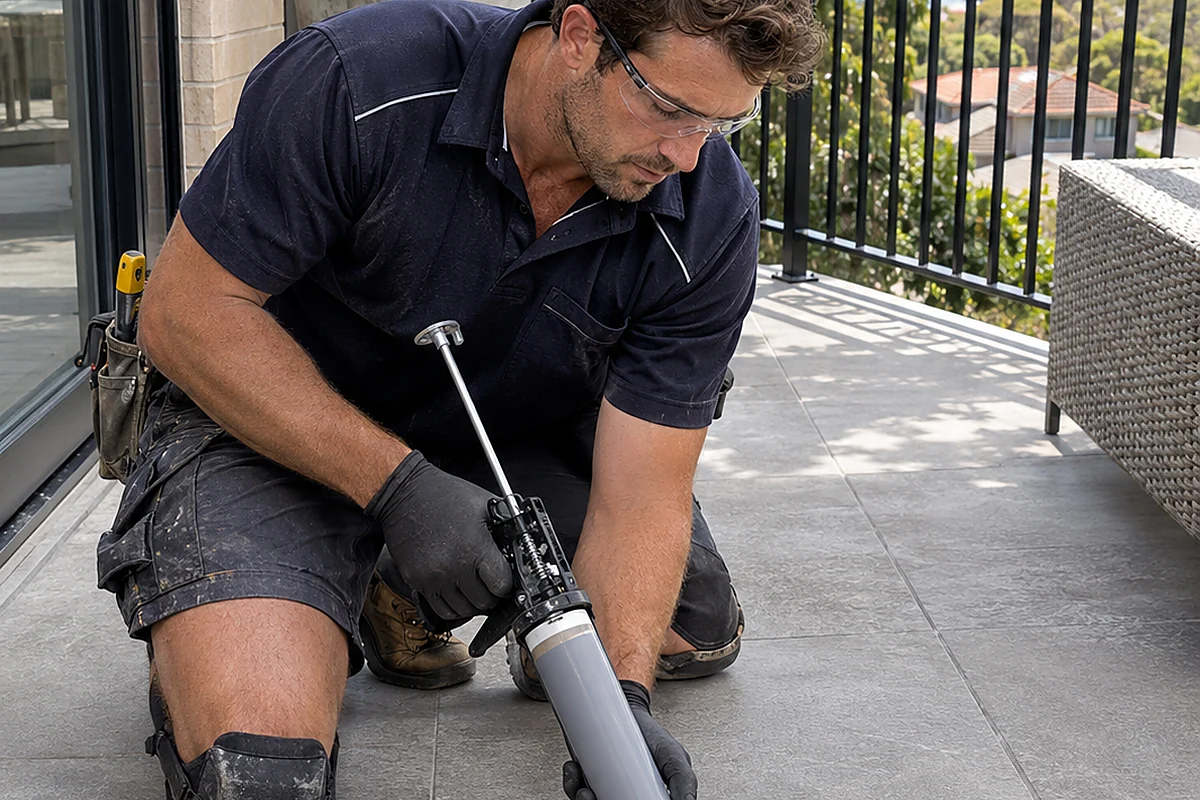
Cement grout is porous, so it can stain. How to seal grout: let it cure for the time on the bag, clean it, apply a penetrating sealer along the joints with a small brush or applicator, and wipe any sealer off the tile face before it dries.
Clean grout with a pH neutral cleaner and avoid bleach on coloured grout. Sealers and haze removers are listed with our grout sealers and tile cleaners.
Who does it
Tiling yourself or hiring a tiler
Grouting and small wall tiling jobs are within reach of a careful DIYer. Floors, wet areas and large tiles are harder: they involve waterproofing, falls and heavy lifting, and waterproofing is licensed work in New South Wales above a set job value.
If you do it yourself, read the data sheet of every product before you start. If you hire a tiler, ask which adhesive and grout they plan to use and why.
Cost
What adhesive and grout add to a job
Tile adhesive on our range is priced from $25 to $75 a bag or tub, and grout, primers and additives from $10 to $206, depending on the product and size. How much you need depends on the tile size, the trowel notch and the joint width.
Compared with the tiles and the labour, the right adhesive and grout are a small part of the cost and the part that decides how long the job lasts. More topics are in our guides and how-tos.
Adhesive and grout
Adhesive and grout questions
What is the best tile adhesive?
The best tile adhesive is the one its maker lists for your tile and surface. Porcelain and large tiles need a flexible, modified cement based adhesive. Ceramic wall tiles indoors can use a premixed adhesive.
What is grout?
Grout is the filler between tiles. It is a fine cement or resin based material that supports the tile edges and keeps water and dirt out of the joints.
How do you grout tiles?
Mix the grout to the bag instructions, push it into the joints with a rubber float, scrape off the excess, then wipe the tiles with a damp sponge once the grout has firmed. Polish off the haze when it is dry.
How long before you can grout after tiling?
Follow the adhesive data sheet. Standard cement based adhesives commonly need about a day before grouting. Rapid setting adhesives can be grouted sooner.
How do you apply grout sealer?
Let the grout cure fully, clean and dry it, then apply a penetrating sealer along the joints with a small brush or applicator. Wipe any sealer off the tile face before it dries.
How do you remove tile adhesive?
Wipe fresh adhesive off with a damp sponge before it sets. Hardened cement adhesive is scraped or chiselled off, or ground back on a floor. Wear eye protection and a dust mask.