
Tile guide
Tile slip ratings explained
A tile slip rating tells you how much grip a tile has when it is wet. This guide explains the P and R ratings used in Australia, which rating suits each room, and how the finish of a tile changes its grip.
The basics
What a tile slip rating is
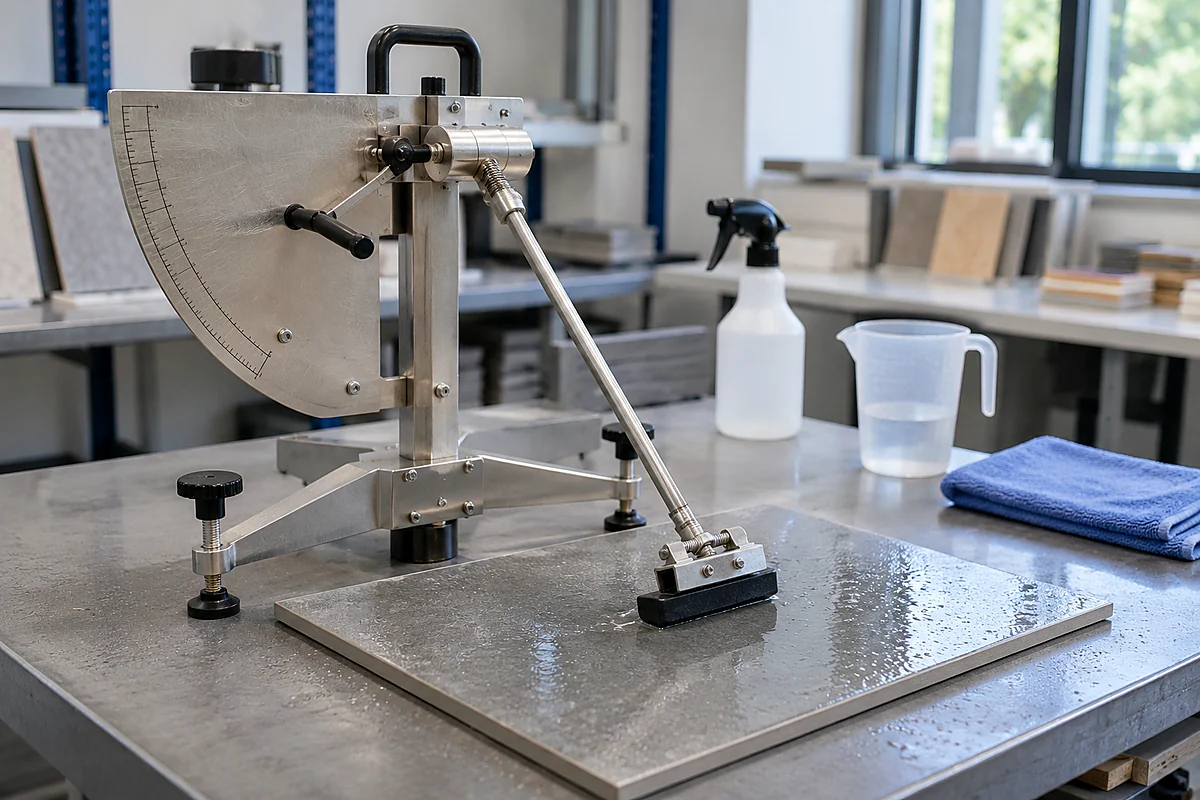
A slip rating is a classification a tile earns in a standard test. In Australia the tests are set out in AS 4586, the standard for the slip resistance of new pedestrian surfaces. The result is printed on the tile specification as a letter and a number, such as P3 or R10.
The rating describes the surface of the tile when it is new. It does not change with the colour or the size, but it does change with the finish. The same tile can carry one rating in a matt finish and a higher one in an external finish.
The tests
P ratings and R ratings: the two tests
The wet pendulum test swings a rubber slider across a wet tile and measures how much the surface slows it. The result is a P rating from P0 to P5, and P5 has the most grip. A P3 tile scored between 35 and 44 on the test, and a P4 tile between 45 and 54.
The oil-wet ramp test has a person walk on an oiled tile while the platform tilts. The angle at which they slip gives an R rating from R9 to R13, and R13 has the most grip. A third test, done barefoot on a wet ramp, gives classes A, B and C and is used for pool areas.
The two scales come from different tests, so one does not convert exactly into the other. When a tile lists both, use the one your builder or certifier asks for.
By room
Which slip rating each room needs
The wetter the floor is likely to be, and the steeper it is, the higher the rating you want.
Which slip rating suits which area?
| Area | Wet pendulum rating | Ramp rating | Where the figure comes from |
|---|---|---|---|
| Indoor floors that stay dry | P1 or P2 | R9 | HB 198 lists P1 and R9 for dry internal areas of public buildings |
| Bathroom, ensuite and laundry floors | P3 | R10 | HB 198 lists P3 and R10 for internal wet areas. A common guide for homes |
| Patios, balconies, verandas, paths and driveways | P4 | R11 | HB 198 lists P4 and R11 for external walkways, balconies, verandas and courtyards |
| Pool surrounds | P4 | Class B on the barefoot test | HB 198 lists P4 or class B for swimming pool surrounds |
| Stair treads and landings | P3 dry, P4 wet | R10 dry, R11 wet | National Construction Code minimum |
| Ramps no steeper than 1 in 14 | P3 dry, P4 wet | R10 dry, R11 wet | National Construction Code minimum |
HB 198:2014 is a guide written for public and commercial buildings, and many people apply the same figures at home. The National Construction Code figures for stairs, landings and ramps are requirements. Confirm what applies to your job with your builder or certifier.
For living areas and bedrooms, choose from our porcelain floor tiles on looks and wear. For wet rooms, choose tiles for your bathroom and check the rating of the floor tile before you buy.
Finish
Why polished tiles rate lower
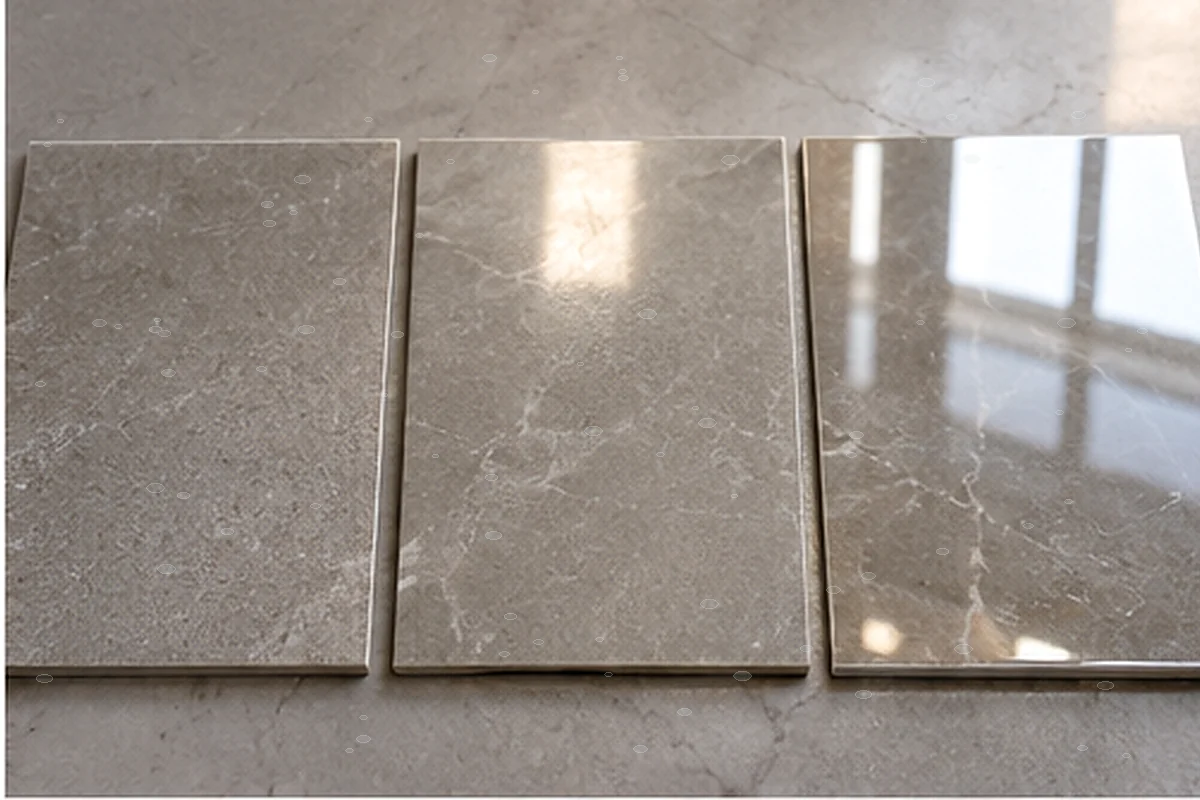
Grip comes from texture. A polished tile has been ground smooth, so a film of water sits between the tile and your shoe with nothing to break it up. A matt tile has a fine texture that cuts through the water, and an external finish has a coarser texture again.
That is why polished tiles sit at the low end of the scale when wet. They are a sound choice for living areas that stay dry, and a poor one for a shower floor.
Outdoors
Slip ratings for outdoor areas and pool surrounds
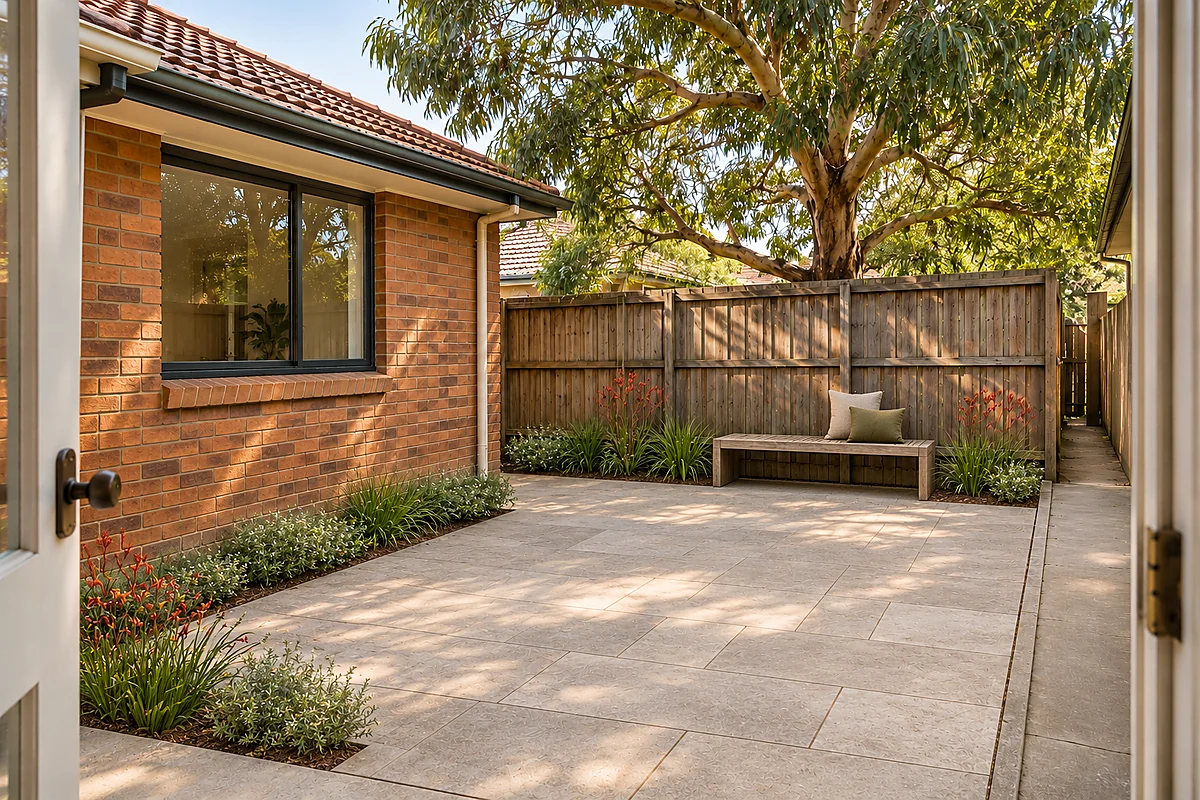
Outdoor tiles get rained on, so they need more grip than indoor tiles. HB 198, the Standards Australia guide to slip resistance, lists P4 or R11 for external walkways, balconies, verandas and courtyards, and P4 or class B for pool surrounds. An R11 slip rating is the figure most often quoted for outdoor tiles.
Some ranges are made in an external finish for this reason. On our site the Sandstone range is listed in an In & Out P4 finish, and the In & Out finish of the Everest range is described as a coarser texture suited to wet area floors, indoors and out. See alfresco and patio tiles for the ranges shown for outdoor use.
Later fixes
Can a tile be made less slippery later
Often the cause is not the tile. Soap, body oils and cleaning residue build a film that makes any floor slippery, so start with a thorough clean and a rinse.
If the tile itself is too smooth, an anti-slip treatment can etch the surface to add grip. It changes the look of some tiles, it needs to be reapplied over time, and the floor does not carry a new rating unless it is tested. Test a spare tile first.
Who to ask
When to ask your tiler or certifier
Ask before you order if the tiles are for stairs, a ramp, a pool area, a rental property or any commercial space. A certifier can ask for the test report that shows the rating, and it is far easier to get that from the supplier before the tiles are laid.
For a house, your tiler can tell you what has worked on similar floors. Tell us where the tile is going and we will check the rating listed for the range.
Cost
Does a higher slip rating cost more
Not as a rule. The price of a tile follows the range, the size and the finish, not the rating on its own. Where a range comes in both an indoor finish and an external finish, compare the two prices on the product page.
The costly mistake is choosing the wrong finish and replacing the floor. More guides are in our tile guides section.
Slip ratings
Slip rating questions
What does P3 mean on a tile?
P3 is a wet pendulum slip rating. It means the tile scored between 35 and 44 on the pendulum test set out in AS 4586. It is a common guide for bathroom and laundry floors.
What is the difference between R10 and R11?
Both come from the oil-wet ramp test. An R10 tile held grip to a ramp angle of between 10 and 19 degrees, and an R11 tile to between 19 and 27 degrees. R11 has more grip and is the figure often used outdoors.
What slip rating do I need for a bathroom floor?
There is no single rule for a bathroom floor in a house. P3 or R10 is a common guide, and it matches the figure HB 198 lists for internal wet areas. Shower floors and accessible bathrooms can call for more grip.
What slip rating is required outdoors in Australia?
The National Construction Code sets minimums for stairs, landings and ramps: P4 or R11 when wet for stair treads. For patios, balconies and paths, HB 198 lists P4 or R11 as a guide. Ask your builder or certifier what applies to your job.
Are matt tiles non slip?
Not automatically. A matt tile has more grip than a polished one, but matt describes the look, not a test result. Check the P or R rating listed for the tile.
How do you make tiles less slippery?
Clean off soap and residue first, as that film is the usual cause. If the tile is still too smooth, an anti-slip treatment can add grip. Test it on a spare tile, because it can change the look of the surface.