
Tile guide
Tile sizes and layouts: choosing the right format
Tile size changes how a room looks, how many grout lines you see and what the laying costs. This guide covers the common sizes, large format tiles and the layout patterns worth knowing.
Sizes
Common tile sizes and what they are called
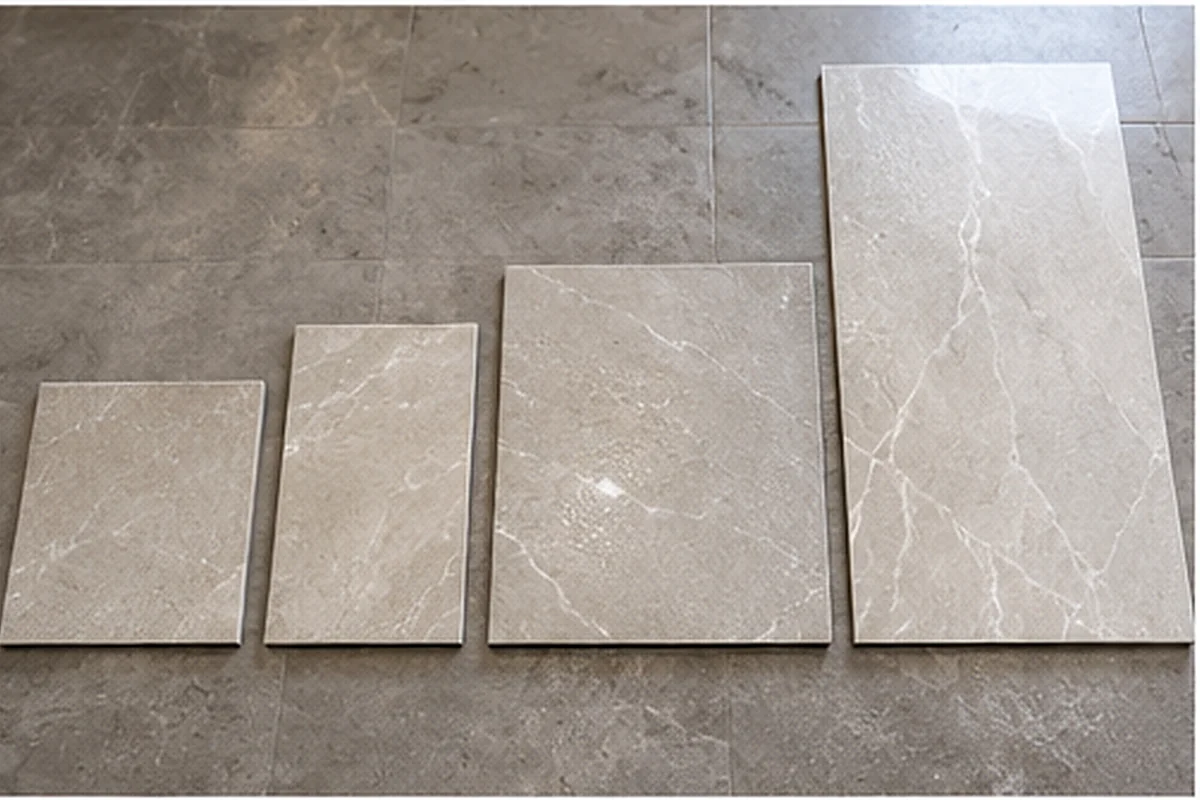
Tiles are named by their width and length in millimetres. The most common tile sizes in Australia are 300 x 600, 600 x 600 and 600 x 1200, and those three make up most of our ranges. We also list 300 x 300 and 750 x 1500.
The sizes are related, which helps with layouts. Two 300 x 600 tiles cover the same space as one 600 x 600, and two 600 x 600 tiles the same as one 600 x 1200, so the grout lines of a floor and a wall can be made to line up.
Large format
What counts as a large format tile
There is no single definition that everyone uses. In most showrooms, large format tiles are those with at least one side of 600 mm or more, and the term is used most for 600 x 1200 and larger.
The appeal is simple: fewer joints. A floor in 600 x 1200 uses a quarter of the tiles of the same floor in 300 x 600, and about half the length of grout line.
The look
How tile size changes the look of a room
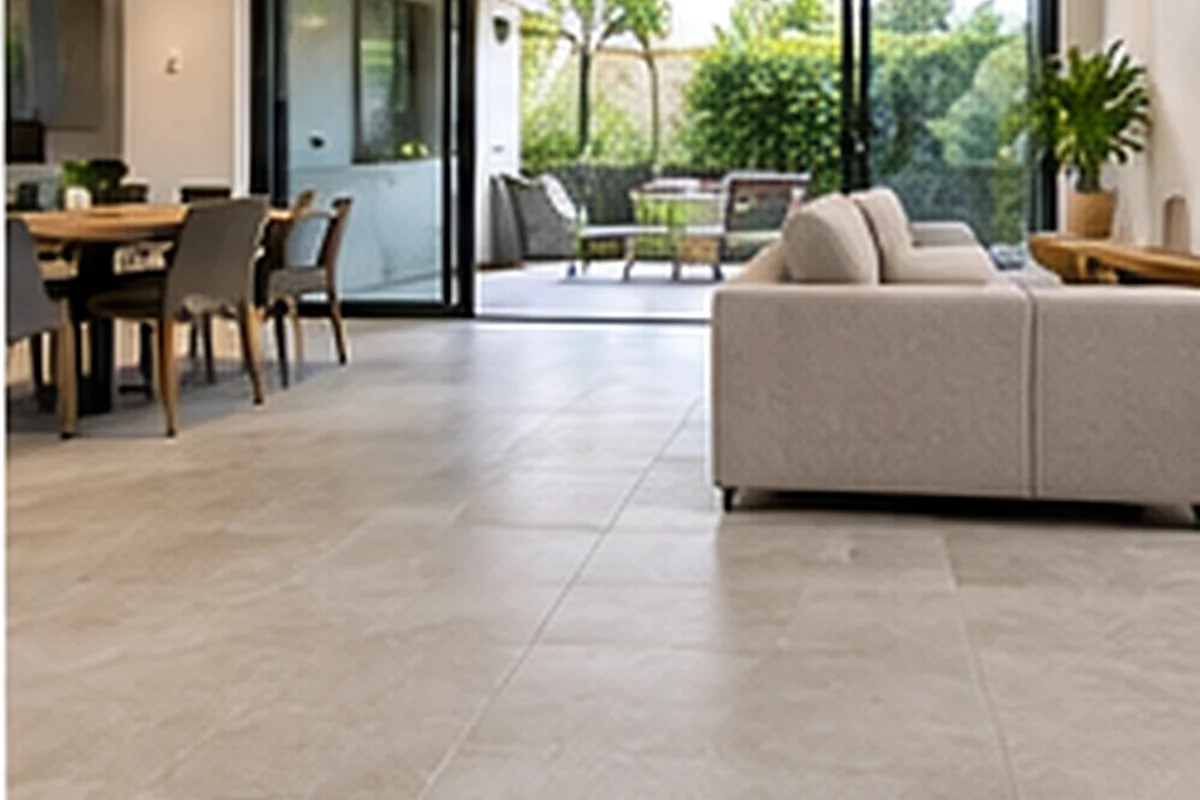
Grout lines form a grid, and the eye reads the grid before it reads the tile. A large tile with a matching grout gives a calm, continuous surface. A small tile with a contrasting grout gives pattern and texture.
Rectangular tiles also give direction. Laid along the length of a room they make it look longer, and laid across it they make it look wider. See the tile collection for the sizes each range comes in.
Patterns
Layout patterns: stacked, brick bond, herringbone
The three tile layout patterns used most are simple to tell apart.
- Stacked: tiles line up in a grid. Clean and modern, and the least waste.
- Brick bond: each row is offset from the last, by half or by a third. A third is usual for long tiles.
- Herringbone: rectangular tiles laid in a zigzag at right angles. The most striking, and the most cutting.
The pattern changes how many tiles you need. Use our guide to work out your tile quantity for each layout.
Small rooms
Small room, large tile: does it work
Yes, in most cases. If you are wondering what size tiles for a small bathroom, a larger tile often makes the room feel bigger, because there are fewer lines to break up the floor.
The limit is practical. Floor tiles for a small bathroom have to follow the falls to the floor waste, and a very large tile cannot bend to a slope. A 300 x 600 or 600 x 600 is usually the largest that lays well, unless the shower has a linear grate along one edge.
By area
Sizes for floors, walls and showers
Which tile size suits which part of the room?
| Where | Sizes that work well | Why |
|---|---|---|
| Living area and kitchen floors | 600 x 600 and 600 x 1200 | Fewer joints across a large floor |
| Bathroom floors | 300 x 600 and 600 x 600 | Easier to lay to the falls of a small floor |
| Shower floors | 300 x 300, or a larger tile cut to the falls | Small tiles follow the slope to the waste |
| Bathroom and kitchen walls | 300 x 600 and 600 x 1200 | 300 x 600 is light to handle, and 600 x 1200 gives few joints |
| Feature walls | 600 x 1200 and 750 x 1500 | Large pieces carry a stone or marble pattern |
A general guide using the sizes on our ranges. Your tiler confirms what suits the floor and its falls.
For floors, see the floor tiles. For wet rooms, our bathroom floor and wall tiles are ranges that come in both a floor and a wall size.
Who lays them
Large format laying: tiler or DIY
A 600 x 1200 porcelain tile is heavy and awkward for one person, and it needs a flat surface, full adhesive coverage and a levelling system to sit flush. That is work for an experienced tiler.
Smaller sizes on a wall, such as 300 x 600, are a more realistic DIY job.
Cost
Size and cost: tile price versus laying cost
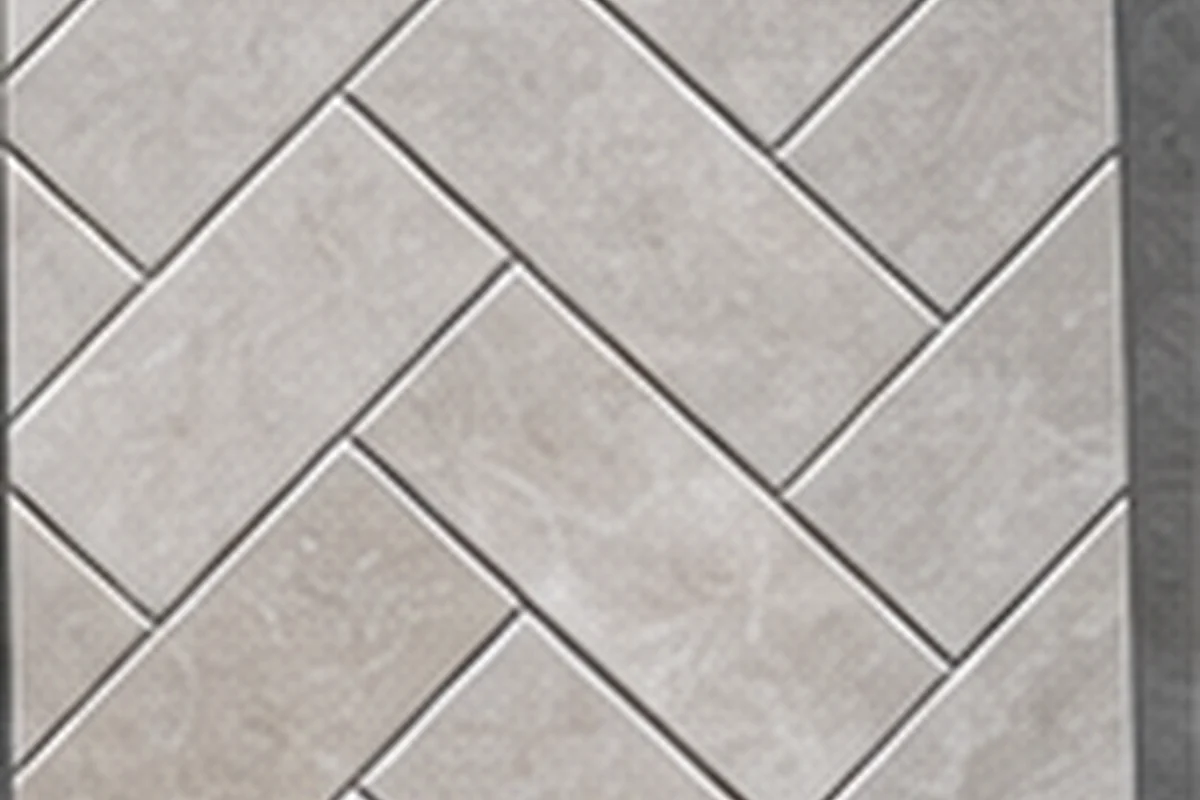
Two costs move with size. The price of the tile per square metre is set by the range and the size, and is shown on each product page. The laying cost is set by your tiler, and it rises for very large tiles, for small mosaics and for patterns such as herringbone.
Ask your tiler for a laying price for the size and pattern you want before you choose, so you can compare the whole job and not only the tile.
Planning
Planning cuts and grout lines
A good layout starts from the centre of the room or from the most visible line, such as a doorway, so the cut tiles at each side are the same width. Thin slivers against a wall are a sign the layout was started from a corner.
Decide where the grout lines of the floor meet the walls, and whether they should line up. Your tiler will set this out dry before any adhesive goes down. More planning help is in our buying guides.
Tile sizes
Tile size and layout questions
What is a large format tile?
There is no single definition, but it usually means a tile with at least one side of 600 mm or more. The term is used most for 600 x 1200 and larger sizes.
What size tile makes a small room look bigger?
A larger tile with a matching grout colour, because fewer grout lines break up the floor. In a small bathroom, 300 x 600 or 600 x 600 usually gives that effect and still lays to the falls.
Are 600 x 600 or 600 x 1200 tiles better?
Neither is better in every room. 600 x 600 suits most floors and is simpler to lay. 600 x 1200 gives fewer joints and suits large, open floors and walls, but costs more to lay.
What is the most popular tile size?
300 x 600, 600 x 600 and 600 x 1200 are the sizes most ranges are made in. On our site, 600 x 600 is listed on more ranges than any other size.
Which tile layout pattern is best?
Stacked is the simplest and wastes the least. Brick bond hides small variations and suits rectangular tiles. Herringbone makes a feature of the floor but needs more tiles and more labour.
Do large tiles cost more to lay?
Usually, yes. Large tiles need a flatter surface, more adhesive, a levelling system and often two people to handle them. Ask your tiler for a price for the size you have chosen.